
Extending across Gujarat, Rajasthan, Haryana, Delhi, it serves as critical shield for north-western India
Himani Sharma
The Aravalli range is among the most ancient mountain systems on Earth, dating back nearly two billion years. Extending across Gujarat, Rajasthan, Haryana and Delhi, this range is not merely a geographical formation but a critical ecological shield for north-western India.
Despite its immense environmental value, the Aravalli ecosystem has been subjected to relentless degradation. Judicial intervention by the Supreme Court of India sought to halt this decline, yet developments following the verdict reveal a growing crisis that threatens the very survival of this ancient range.
Geographical and geological importance
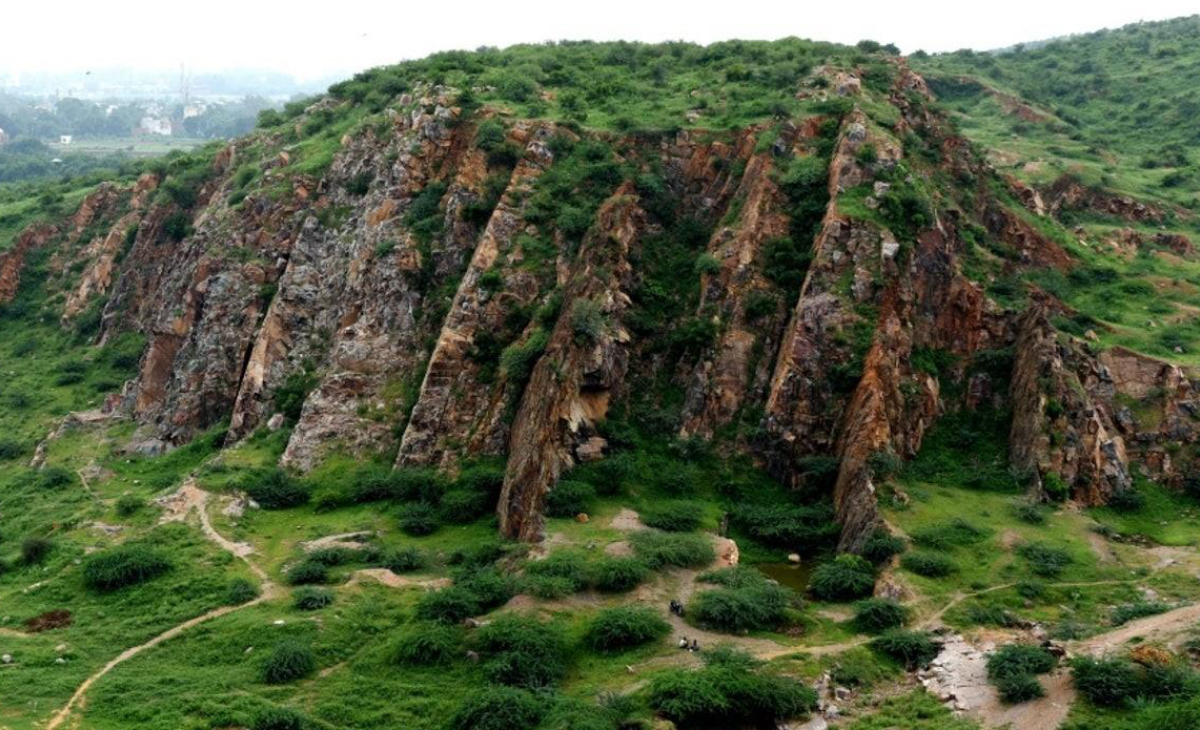
The Aravallis stretch for approximately 670 km, forming a natural divide between the arid Thar Desert and the semi-arid to fertile plains of northern India. Geologically, they consist of some of the oldest metamorphic rocks in the world, rich in minerals and characterised by fractured structures that allow efficient groundwater recharge.
Unlike young fold mountains such as the Himalayas, the Aravallis are residual mountains that have been heavily eroded over time. This fragile nature makes them extremely vulnerable to human interference, particularly mining and large-scale construction.
Acting as barrier against desertification
One of the most critical roles of the Aravalli Range is its function as a natural barrier preventing the eastward expansion of the Thar Desert. By slowing wind velocity and stabilising soil, the hills reduce sand movement and desert encroachment into densely populated regions such as Haryana, Delhi and western Uttar Pradesh. The destruction of this barrier accelerates desertification and land degradation.
Groundwater recharge and water security
The Aravalli hills act as major groundwater recharge zones. Rainwater infiltrates the fractured rock system, replenishing aquifers that supply water to millions of people. Several rivers and seasonal streams such as the Luni, Banas, Sahibi and their tributaries originate from this range.
In water-stressed regions, the Aravallis are crucial for sustaining agriculture, livestock and urban water supplies. Despite appearing dry and rugged, the Aravalli range supports rich biodiversity. It harbours dry deciduous forests, thorn scrub vegetation, grasslands and wetlands.
These ecosystems support wildlife, including leopards, striped hyenas, golden jackals, nilgai, pangolins and numerous reptile and bird species. Protected areas like Sariska Tiger Reserve and parts of the Delhi Ridge are integral components of this ecosystem.
Climate regulation and air quality
The Aravallis influence local and regional climate by moderating temperatures, enhancing humidity and reducing dust storms. Forested sections of the range act as carbon sinks, absorbing atmospheric carbon dioxide and mitigating climate change.
In the National Capital Region, the Delhi Ridge serves as a green lung, helping reduce air pollution and heat stress.
Anthropogenic pressures, long-term degradation
Over decades, the Aravalli Range has suffered systematic destruction due to human activities. Extensive legal and illegal mining for stone, marble, quartz and other minerals has resulted in the flattening of hills and permanent alteration of landforms.
Urban expansion in cities like Gurugram, Faridabad, Jaipur and Alwar has led to large-scale encroachment and deforestation. Industrialisation, road construction and real estate development have fragmented wildlife habitats and disrupted natural drainage systems.
These activities have contributed to declining groundwater levels, increased frequency of floods during monsoons, rising temperatures and deteriorating air quality.
Supreme Court intervention: Intent and legal significance
The Supreme Court intervened to protect the Aravalli ecosystem after recognising the scale of environmental damage. In several landmark judgments, the top court banned mining and restricted construction activities in identified Aravalli areas, particularly in Haryana and Rajasthan.
A crucial aspect of the apex court’s observation was that the Aravallis must be treated as forests in the ecological sense, regardless of how they are classified in land revenue records. The court emphasised that environmental protection cannot be compromised by administrative technicalities or economic interests.
Despite the Supreme Court’s strong stance, the post-verdict scenario has exposed serious implementation failures. State governments and local authorities have, in some instances, reclassified forest land as non-forest or “gair mumkin pahad”, allowing construction and infrastructure projects to proceed.
This has effectively weakened the protective framework envisioned by the top court. Illegal mining continues in several regions due to poor monitoring and enforcement. Urban projects have fragmented the Aravalli landscape, disrupting wildlife corridors and reducing ecological connectivity.
Environmental experts warn that such actions contradict the spirit of judicial protection and place the range under renewed threat. The continued degradation of the Aravalli Range has far-reaching consequences. Accelerated desertification, severe water scarcity, increased air pollution and loss of biodiversity are immediate outcomes.
The weakening of groundwater recharge systems threatens agricultural productivity and urban water security. Socially, the destruction of the Aravallis affects rural livelihoods, increases climate vulnerability and intensifies environmental inequality.
Urban populations face rising health risks due to heat waves, dust pollution and water shortages. Saving the Aravalli range requires urgent, coordinated and long-term action. A dedicated national-level Aravalli conservation law is essential to ensure uniform protection across states.
Strict enforcement of mining bans, transparent land classification and accountability mechanisms must be established. Large-scale ecological restoration through afforestation with native species, revival of traditional water harvesting systems and protection of wildlife corridors is crucial.
Equally important is public awareness, community participation and integration of environmental concerns into urban planning and development policies. The Aravalli Range is not a barren or expendable landscape but a foundational ecological system that sustains life across north-western India.
The Supreme Court’s intervention recognised this truth, yet the crisis unfolding after the verdict reveals a dangerous gap between legal intent and ground reality. If this ancient mountain system continues to erode, the consequences will be ecological, economic and human in scale.
Protecting the Aravallis is not merely an environmental obligation but a moral responsibility towards future generations. The fate of this ancient range will determine the environmental resilience of northern India in an era of climate uncertainty and growing human pressure.

Himani Sharma